

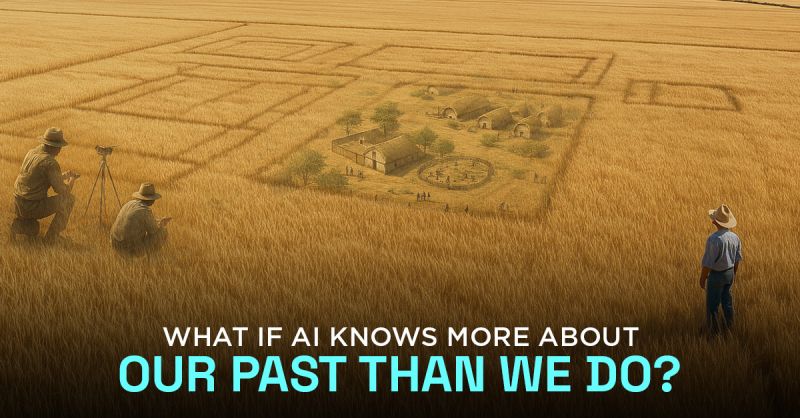
A farmer in Peru once noticed strange square patterns in his wheat fields.
At first, he thought it was pests. Later, archaeologists discovered those patterns weren’t random at all.
They were the faint outlines of ancient settlements, invisible from the ground but clear from above.
Now imagine AI doing this at scale.
With satellite imagery and machine learning, archaeologists no longer have to dig blindly. Algorithms can scan thousands of square kilometers, spotting subtle soil marks, vegetation changes, or shadows that hint at buried ruins.
Here’s what this looks like in action:
→ In the Amazon, AI helped uncover dozens of lost cities hidden under dense rainforest.
→ In Egypt, satellite models flagged potential pyramids buried beneath sand.
→ In Rome, deep learning identified forgotten roads and aqueducts without a single shovel hitting the ground.
What this really means is that history is no longer trapped underground.
AI is turning archaeology into a digital science, one where we can rediscover entire civilizations without disturbing a single stone.
Of course, the question remains…Will technology rewrite the stories we thought we knew about our past?